Allyship, along with the related concepts of sponsorship and mentoring, has been a powerful contributor to improving the representation of marginalised and minoritised groups.
An ally provides support to those from under-represented groups, for example women in engineering or physical sciences. They can be powerfully helpful to individuals, but to be truly effective they also need to act beyond individual relationships to effect systemic change.
At one point allyship was problematic as an inclusion tool as it often centred the ally, rather than the needs of those benefiting from support. It could be a version of the “white saviour”, with the ally taking instead of enabling agency.
But work to link it to recognising and harnessing privilege in driving change, and connecting it to inclusive leadership has brought a more powerful allyship into being. Jennifer’s Brown Ally Continuum (see the link at the end of this post) is particularly useful and widely adopted. She also refers to it as the Inclusive Leader Continuum, making the key connection that truly inclusive leaders are allies.
The transition from individual ally to strategic allyship is analogous to the shift from not being racist to being actively anti-racist. The mindset change might be as profound.
An Ally’s Journey
On book on my book list for International Women’s Day provides an illustration of this sort of transition. The Book of Queer Prophets is a series of texts where the authors reflect on the interaction between their identities as people of faith and as queer people. They are thoughtful, novel and often moving.
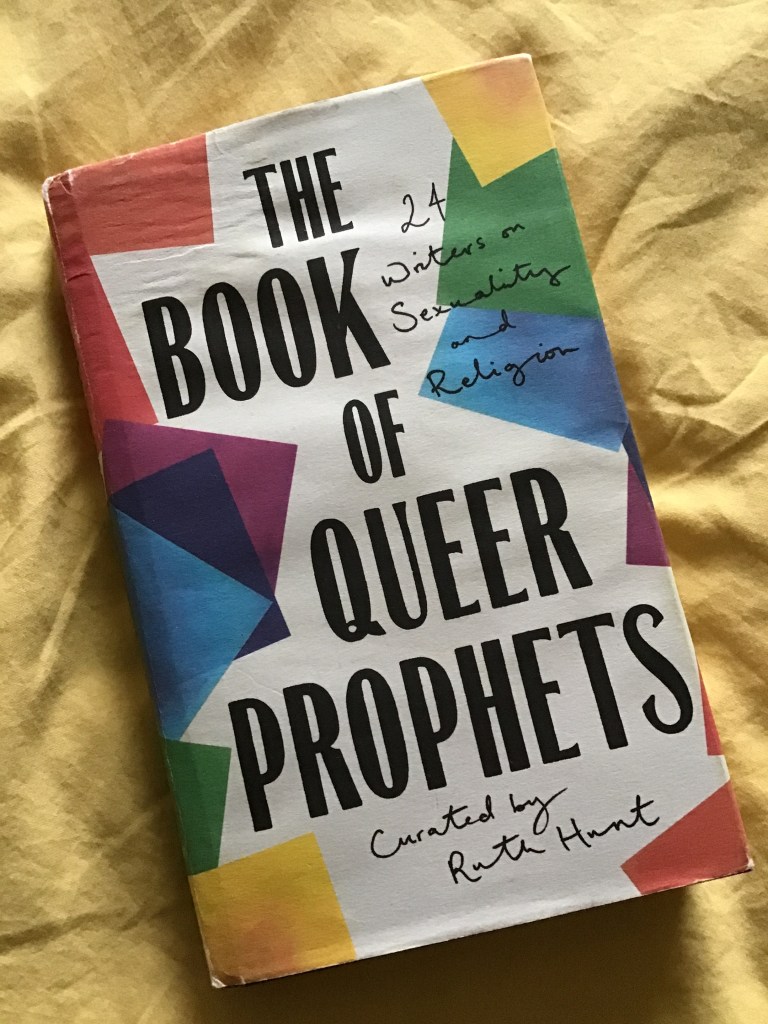
The final text, presented as an “Afterword” is different.
Reverend Kate Bottley (Kate in the book) shares her journey from responding to a news report about same sex marriage on Gogglebox (her response on camera: “I don’t see what the difference is”) to becoming a genuine ally to queer people through her ministry, as a journalist and within the Church of England where “only Narnia had a bigger closet”. Her narrative is one of changed mindset and honest reflection on never being challenged on how her views might not align with expectations of her as a vicar.
Her progression was gradual, serendipitous and supported by a series of experiences and interactions that helped her move from a passive position of not seeing the difference to actively listening, learning and changing her language. This gradual, organic development is powerful in embedding the shift in mindset. But it can also be incomplete and take some considerable time.
Intentional Allyship
In our work on allyship, we aim to formalise this transition with high quality learning and scaffolding. While this can accelerate the change in mindset, more important is the exploration of motivations, identification of knowledge gaps and addressing blocks on the road to true allyship.
In helping a client develop meaningful allyship programmes, to create effective allies, here are some of what we have found to be important:
- Uncovering assumptions, biases, gaps in understanding or experiences, and the implications for poorer decision making, environments that exclude or lives diminished.
- Developing techniques and resilience in identifying areas for growth to be a better ally, such as difficult experiences, hard-to-fill gaps or poor use of language.
- Recognise where past action or inaction has contributed to exclusion, processing that to allow growth, remembering Emma Dabiri’s exhortation to abandon guilt.
- The positive role the ally’s privilege plays in ensuring diverse perspectives are accounted for, different people are heard and exclusionary behaviours are called in.
- Understanding that movement along Jennifer Brown’s Allyship Continuum can be back and forth, as confidence and knowledge develops and challenged in practice.
- Further that you can be at very different places along the continuum on a variety of inclusion, diversity and experience dimensions, at the same time.
- Practice being the voice of those who are not included in the “room” be it a physical space or the conceptual ones of teams, committees, peer groups.
- Becoming comfortable challenging assumptions and pointing out gaps that prevent processes, policies, discussions, and the myriad of ways people work together being truly inclusive.
- Seeking out different lived experiences, priorities and expectations to develop a rich understanding of the interaction between diversity, inclusion, fairness, success and respect.
- Amplifying the voices, relevance and presence of those otherwise excluded by absence or dismissal, by ensuring they are listened to, their experiences valued and their ideas recognised.
Simple examples of this last include:
- Ensuring Global Ethnic Majority people can share their experiences, and the implications are understood and valued by those with different lives.
- In settings where most people are men, challenging sexism and misogyny as it arises, not just when there is direct impact for a woman who is present.
- Sharing relevant stories and experiences you have come across and understand, that are counter to the assumptions and expectations informing decision making.
While recognising the tangible benefits for the ally, we ensure they foreground the agency of those they support. Allyship can then have authentic impact beyond the individual, as an ally influences decisions, groups and activities to account for diverse experiences even in the absence of those who lived them.
Allyship development can be stand alone or embedded in wider programmes, and span scales from individuals to whole organisations. Individual development is usually as part of a wider coaching process for inclusive leaders. It is a key tool for developing inclusive cultures where the actions and motivations of individuals is critical.
Eyres Inclusion Consulting was founded by Principal Consultant Dr Stewart Eyres. After nearly 30 years in universities, progressing from doctoral student to Dean of Faculty, he became a consultant specialising in inclusion as a core tool of successful organisations. His practice is informed by a conviction that inclusion has huge and fundamental benefits for every individual. Truly inclusive cultures work for everyone, adapting to changes and openly navigating differences. If this is what you are looking for, or if you need convincing, book a meeting or get in touch, or explore our services.
#InternationalWomensDay #Inclusion #Allyship #Privilege #InclusiveWorkplaces
Originally published on LinkedIn for Eyres Inclusion Consulting.

